

The Jomsom Muktinath Trekking route is one of Nepal’s most rewarding short Himalayan journeys, combining dramatic mountain scenery, traditional Himalayan villages, ancient religious sites, and the distinctive landscapes of the Mustang region. The trek follows the Kali Gandaki Valley toward Muktinath, a sacred pilgrimage destination revered by both Hindus and Buddhists.
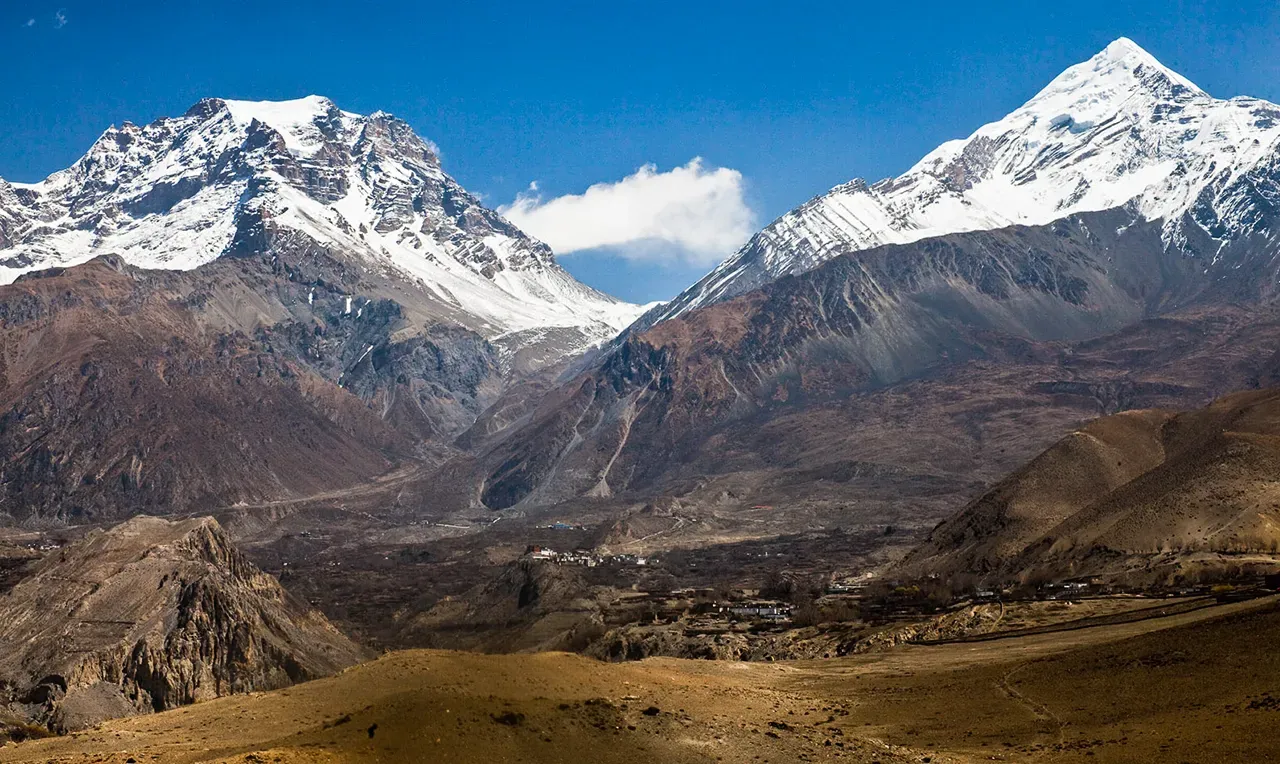
Muktinath is located in Mustang at roughly 3,700–3,800 meters above sea level. The area is famous for its temple, sacred water sources, Jwala Mai shrine, and the unique cultural connection between Hindu and Buddhist traditions.
Unlike longer Himalayan expeditions, the Jomsom Muktinath Trek can be adapted into a relatively short itinerary, making it attractive to travelers who want to experience the Annapurna region without committing to a full Annapurna Circuit Trek.
What Is the Jomsom Muktinath Trek?
The Jomsom Muktinath Trek is a trekking journey through the lower Mustang area, generally beginning around Jomsom and continuing through villages such as Kagbeni toward Muktinath.
Jomsom sits at approximately 2,700 meters and serves as an important gateway to Mustang. From here, trekkers can follow the Kali Gandaki Valley toward Kagbeni and then ascend toward Muktinath.
The route is also connected with the famous Annapurna Circuit. Trekkers completing the circuit traditionally descend from the Thorong La Pass toward Muktinath before continuing through Jomsom and the Kali Gandaki Valley.
Today, road access has changed some parts of the traditional trekking experience. Nevertheless, walking sections through the villages, river valley and mountain landscapes remains an excellent way to experience the region.
Highlights of Jomsom Muktinath Trekking
The trek offers a combination of natural, cultural and spiritual attractions.
1. Muktinath Temple
Muktinath is the principal attraction of the journey. Nepal Tourism Board describes the site as sacred to both Hindus and Buddhists. Hindu pilgrims associate Muktinath with Lord Vishnu, while Buddhists know the area as Chumig Gyatsa.
The temple complex includes 108 sacred water spouts and the nearby Jwala Mai temple, where a natural flame is traditionally regarded as sacred.
For many visitors, reaching Muktinath is more than completing a trek—it is a meaningful spiritual and cultural experience.
2. Kali Gandaki Valley
The trek follows the spectacular Kali Gandaki Valley, one of the defining geographical features of the Annapurna and Mustang regions.
The valley separates the massive Annapurna and Dhaulagiri mountain ranges and provides constantly changing scenery as the trail moves from greener lower elevations toward the dry, high-altitude landscapes of Mustang.
3. Kagbeni
Kagbeni is one of the most atmospheric villages on the route. Located at approximately 2,800 meters, it features traditional houses, Buddhist monuments, prayer stones and narrow village lanes.
Nepal Tourism Board identifies Kagbeni as an important cultural and religious location in Mustang and notes its connection with Hindu ancestral rituals.
4. Himalayan Landscapes
One of the most memorable aspects of Jomsom Muktinath trekking is the dramatic change in scenery.
You can experience:
-
Snow-covered Himalayan peaks
-
Deep river valleys
-
Dry mountain slopes
-
Traditional stone and mud houses
-
Buddhist prayer flags and monasteries
-
Apple-growing villages
-
Kali Gandaki river landscapes
-
High-altitude desert scenery
This variety makes the journey particularly attractive to photographers and travelers interested in Himalayan culture.
Suggested Jomsom Muktinath Trek Itinerary
A practical itinerary can vary according to transportation, fitness level and whether you want to trek both directions.
Day 1: Kathmandu to Pokhara
Travel from Kathmandu to Pokhara by road or flight. Pokhara is the major tourism hub for the Annapurna region and provides access to Jomsom.
Spend the night in Pokhara and prepare for the mountain journey.
Day 2: Pokhara to Jomsom
The flight from Pokhara to Jomsom provides spectacular views of the Himalayan landscape. Jomsom is situated at approximately 2,700 meters.
After arriving, spend time acclimatizing and exploring the town rather than immediately pushing toward higher elevations.
Day 3: Jomsom to Kagbeni
Begin trekking along the Kali Gandaki Valley toward Kagbeni.
The landscape becomes increasingly dry and rugged as you move north. Kagbeni provides an excellent opportunity to experience traditional Mustang architecture and Buddhist culture.
Day 4: Kagbeni to Muktinath
Continue toward Muktinath, gradually gaining elevation.
The route passes through high-altitude villages and spectacular mountain terrain. Once you arrive at Muktinath, explore the temple area and surrounding religious sites.
Because Muktinath is at approximately 3,700–3,800 meters, maintaining a comfortable pace is important.
Day 5: Explore Muktinath and Surroundings
Spend additional time exploring the Muktinath area.
Visit the temple complex, sacred water spouts and Jwala Mai shrine while respecting local religious customs. This extra day can also provide valuable acclimatization before descending.
Day 6: Muktinath to Jomsom
Return toward Jomsom through the Kali Gandaki Valley.
Trekkers should understand that modern roads have reached many sections of the Mustang region. Depending on the selected itinerary, some portions may involve walking alongside or using mountain roads rather than completely isolated trekking trails.
Day 7: Jomsom to Pokhara
Return to Pokhara by flight when operating conditions permit.
Mountain flights are weather-dependent, so allowing some flexibility in your schedule is sensible.
Best Time for Jomsom Muktinath Trek
The best trekking periods generally include spring and autumn, particularly March–April and October–November, when weather conditions are often favorable for Himalayan travel.
Mustang is located in a rain-shadow area, meaning it receives considerably less rainfall than many other parts of Nepal. This makes the Mustang region different from many trekking areas during the monsoon. However, transportation conditions, mountain roads and flights can still be affected by weather.
Spring
March to May offers:
-
Mild daytime temperatures
-
Developing mountain views
-
Spring vegetation
-
Comfortable trekking conditions
Autumn
September to November is another popular period because of generally clear mountain views and favorable trekking conditions.
Winter
Winter brings significantly colder conditions at higher elevations. Snow and freezing temperatures can make the journey more challenging, so proper clothing and preparation are essential.
Monsoon
June to September can be considered for Mustang because of its rain-shadow location, but road and transportation conditions can still change rapidly. Travelers should check current conditions before departure.
Difficulty Level
The Jomsom Muktinath Trek is generally considered a moderate Himalayan trek, but difficulty depends heavily on the itinerary and altitude profile.
The most important challenge is not necessarily technical climbing. Instead, trekkers must manage:
-
High altitude
-
Long walking days
-
Dry mountain conditions
-
Strong winds
-
Cold temperatures
-
Uneven trails
-
Rapid changes in weather
Travelers who are accustomed to regular walking and hiking can usually prepare adequately through cardiovascular exercise, hill walking and regular endurance training.
Altitude and Acclimatization
Altitude deserves serious attention because Muktinath lies above 3,700 meters.
Travelers arriving quickly from lower elevations should avoid rushing. Spending time at Jomsom or another intermediate elevation can help the body adjust before ascending further.
Common altitude-related symptoms can include headache, nausea, unusual fatigue and shortness of breath. Anyone experiencing worsening symptoms should stop ascending and seek appropriate medical assistance.
A slower itinerary is generally more comfortable than trying to complete the route as quickly as possible.
Transportation and Road Considerations
The character of the Jomsom Muktinath journey has changed because roads now reach large portions of the Kali Gandaki corridor.
Nepal Tourism Board notes road access from the Muktinath area toward Beni and regular air connections between Pokhara and Jomsom.
This creates several options:
Flight + Trek:
Fly Pokhara to Jomsom and trek toward Muktinath.
Jeep + Trek:
Use local transportation for selected sections while walking the most scenic portions.
Full Road Journey:
Travel by road toward Muktinath, although conditions can be rough and highly dependent on weather and maintenance.
For travelers specifically interested in trekking, combining transportation with walking sections can help avoid excessive road walking while preserving the cultural and scenic aspects of the journey.
Accommodation and Food
Tea houses and lodges are available along the principal route.
Accommodation is generally simple but suitable for trekkers. Depending on the location, facilities can range from basic rooms to more comfortable lodges.
Common meals include:
-
Dal bhat
-
Rice and vegetables
-
Noodles
-
Soups
-
Tibetan-style bread
-
Potatoes
-
Eggs
-
Tea and coffee
At higher elevations, maintaining adequate hydration and eating regular meals are especially important.
What to Pack
A carefully prepared backpack can make the trek considerably more comfortable.
Essential items include:
-
Warm trekking layers
-
Waterproof jacket
-
Comfortable trekking shoes
-
Warm socks
-
Gloves
-
Hat and sun protection
-
Sunglasses
-
Sunscreen
-
Water bottle
-
Personal medication
-
Small first-aid kit
-
Headlamp
-
Power bank
-
Sleeping bag if required
-
Lightweight backpack
-
Trekking poles
Because the Mustang region can be windy and cold, warm layers are particularly useful even when daytime temperatures appear comfortable.
Why Choose Jomsom Muktinath Trekking?
The main attraction of this trek is its combination of Himalayan adventure and cultural depth.
It allows travelers to experience the Annapurna region, traditional Mustang communities, Buddhist heritage, dramatic landscapes and one of Nepal’s most significant pilgrimage destinations within a relatively compact journey.
The trek can also be customized. Some travelers prefer a walking-focused itinerary, while others combine trekking with flights and local transportation.
Conclusion
Jomsom Muktinath Trekking offers a memorable journey through one of Nepal’s most culturally significant and visually distinctive Himalayan regions. From the mountain town of Jomsom and the historic village of Kagbeni to the sacred sanctuary of Muktinath, every stage offers a different perspective on Mustang.
The combination of Kali Gandaki landscapes, Himalayan mountains, Buddhist culture, traditional villages and Muktinath’s religious heritage makes this trek particularly appealing to travelers looking for more than a conventional mountain hike.
With appropriate acclimatization, suitable equipment, flexible transportation plans and careful consideration of seasonal conditions, the Jomsom Muktinath Trek can become an unforgettable Himalayan experience.
Key Takeaways
-
Jomsom is an important gateway to the Mustang region.
-
Muktinath is sacred to both Hindus and Buddhists.
-
The destination sits at roughly 3,700–3,800 meters.
-
Kagbeni is an important cultural stop along the route.
-
The Kali Gandaki Valley provides spectacular mountain scenery.
-
Road and flight conditions can change with weather.
-
Acclimatization is important because of the high altitude.
-
Spring and autumn are popular periods for trekking.
-
The itinerary can be customized with flights, walking and local transportation.